
Best Practice Guides
These guides are part of the MINERVA European Support Centre effort to help AI researchers, engineers, and support teams make effective use of European High Performance Computing (HPC) and AI infrastructure. They focus on the practical and conceptual knowledge needed to develop, train, optimize, deploy, and interpret AI models on shared supercomputing and GPU systems.
HPC Grant Studio
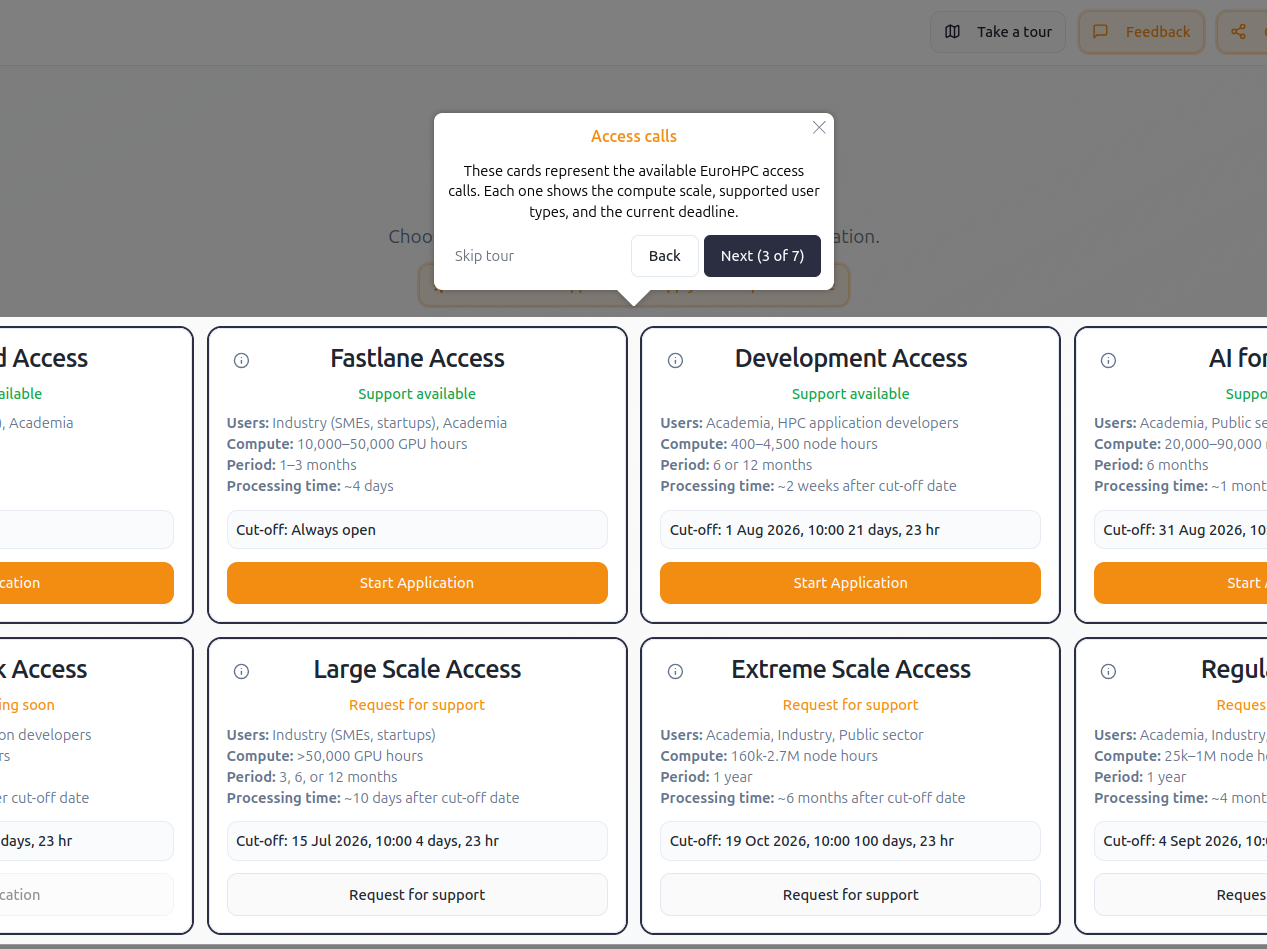
A dedicated tool developed within MINERVA aimed at lowering the entry barrier to EuroHPC access calls, including AI Factory calls and Development Access schemes. This enables researchers to easily navigate, understand, and complete EuroHPC grant applications, guiding users step by step through the process of identifying suitable access calls, understanding eligibility and evaluation criteria, and preparing strong, well-aligned proposals.
Compute Needs Estimator
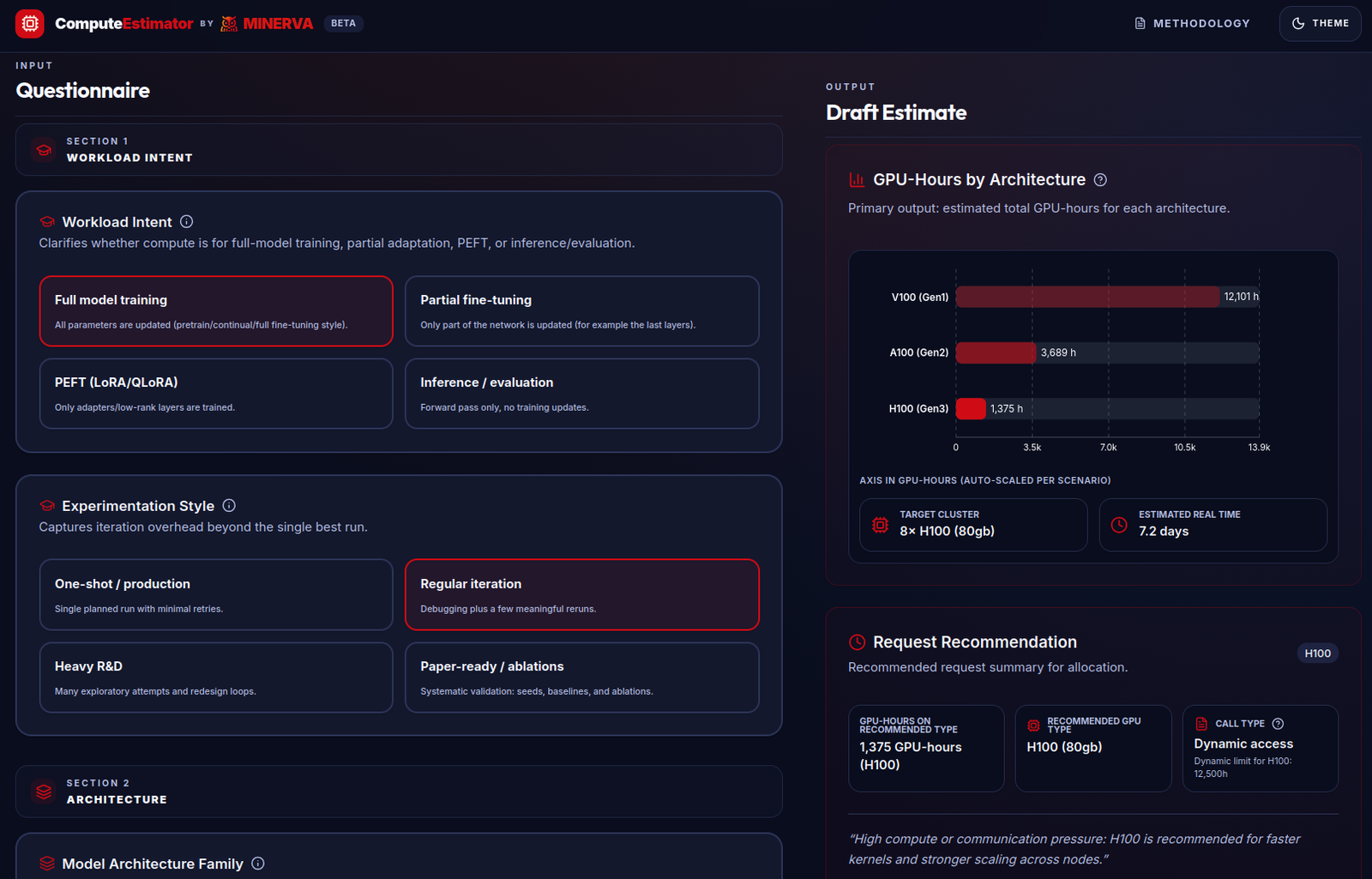
A guided estimator grounded in documented formulas, benchmark-informed assumptions, and hardware specifications to translate your research plans into credible GPU-hour requests for HPC clusters like Jean Zay. It is based on transparent heuristics and provides estimates and justifications to be reused directly or in combination with other MINERVA resources.
Benchmarks
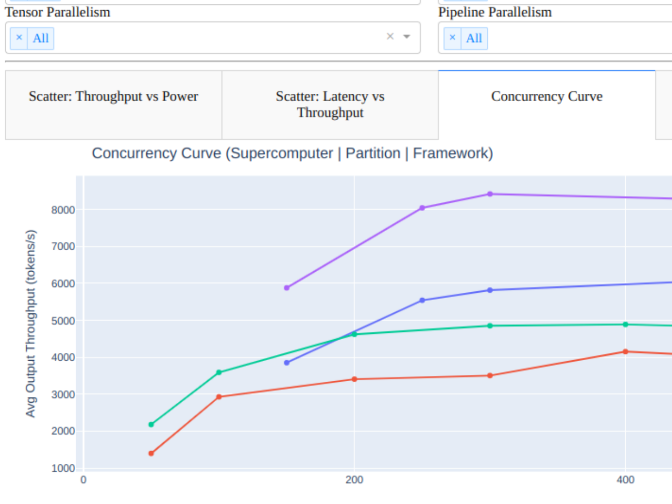
An initiative to evaluate and compare Artificial Intelligence workloads across European supercomputers. The repository aims to provide a transparent, standardized, and reproducible framework for assessing high-performance computing (HPC) systems used in large-scale AI applications.
The benchmarks are conducted across leading European systems such as MareNostrum5, Leonardo, and LUMI among others. Each benchmark captures detailed performance, scaling, and efficiency metrics under various hardware configurations and workload types.
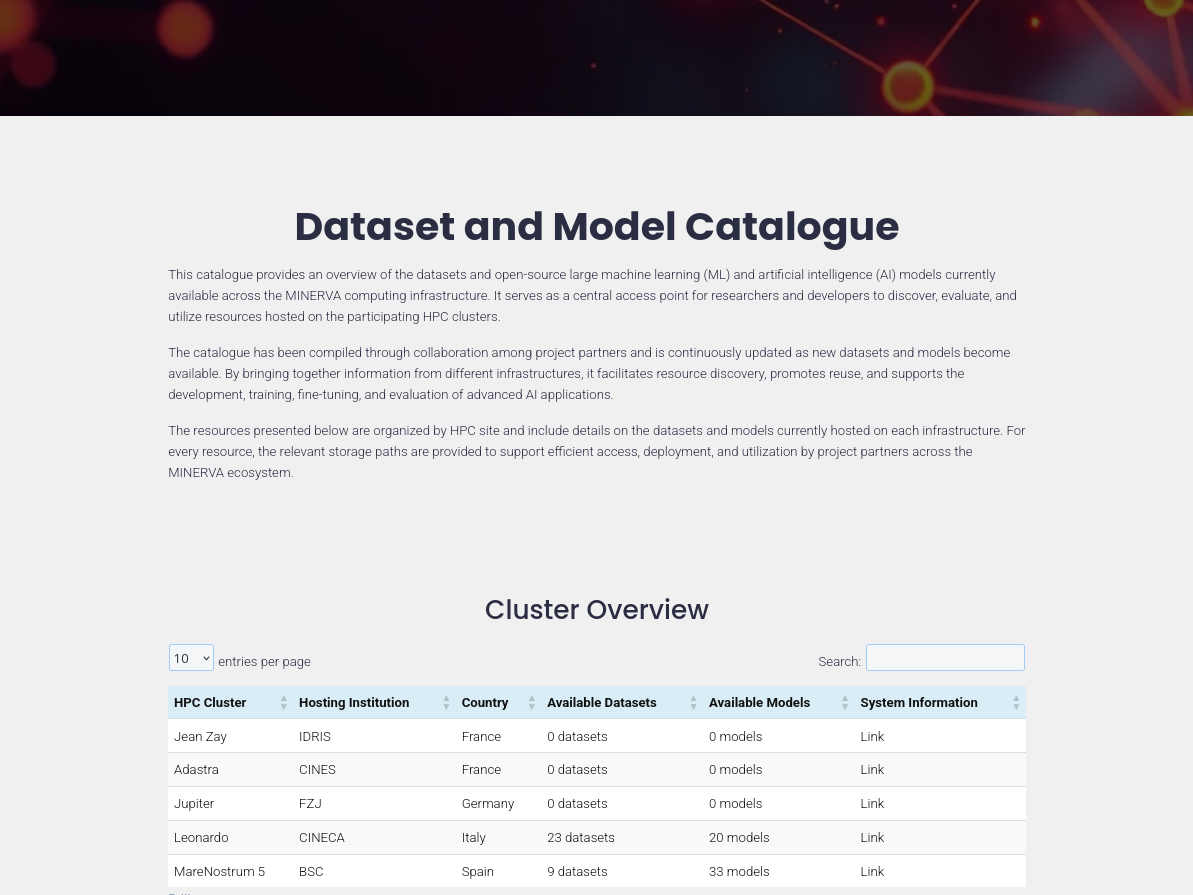
Dataset and Model Catalogue
This catalogue provides an overview of the datasets and open-source large machine learning (ML) and artificial intelligence (AI) models currently available across the MINERVA computing infrastructure. It serves as a central access point for researchers and developers to discover, evaluate, and utilize resources hosted on the participating HPC clusters, facilitating resource discovery and reuse.